Italian Cheeses Elevate the Deli
March 25, 2026 | 5 min to read
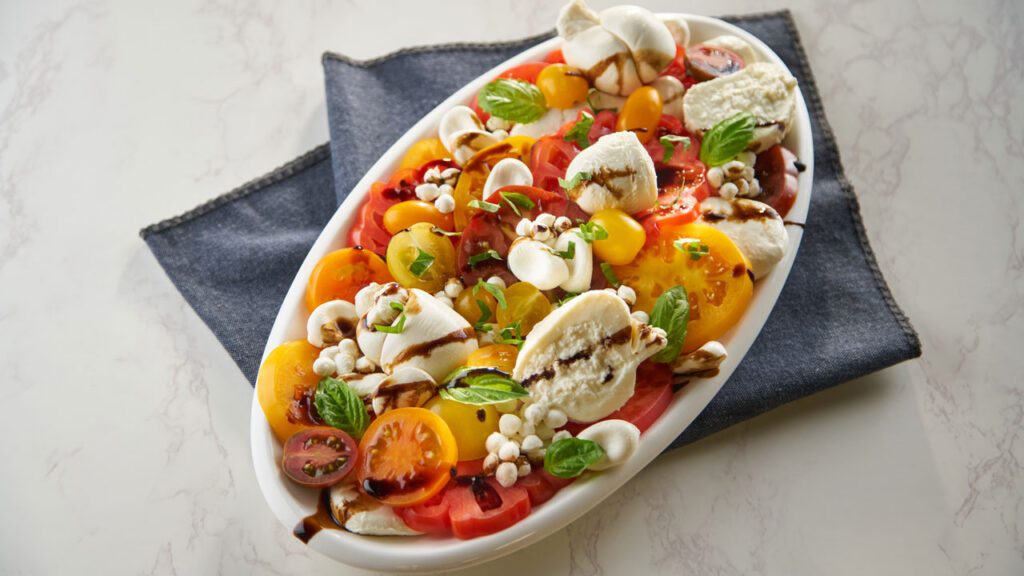
Promoting the enduring appeal of Italian cheeses in the department.
Whether it’s a wheel of aged Italian Parmigiano-Reggiano ready to be cracked open or a creamy ball of fresh Wisconsin mozzarella, Italian and Italian-style cheeses have long had a place of honor in the deli department. While authenticity is always respected, the category continues to evolve, making Italian and Italian-style cheeses among the most interesting and profitable items a deli can keep in stock.
A CATEGORY ON THE RISE
According to Cheese Merchants, a producer of Italian-style cheeses, Parmesan is the third best-selling cheese type in the U.S., with more than a billion dollars in annual sales — it’s also the top growth driver, up nearly $50 million. Only cheddar and mozzarella outsell it.
Jim Wittig, vice president of retail for Cheese Merchants, Bartlett, IL, knows why: Consumers prefer artisanal and minimally processed foods, and inflation has kept more people cooking at home. Social media buzz has also discovered Parmesan; posts are circulating noting that a serving of Parmesan can contain more protein than the equivalent portion of chicken.
The four primary domestic Italian cheeses — Parmesan, Asiago, Romano and fontina — have long been category anchors. But Natale Caputo, chief executive of Caputo Cheese, a Chicago, IL-based cheese manufacturer, sees the American palate expanding beyond those classics.
“In every restaurant, every grocery store, burrata is readily available. Stracciatella is becoming very popular,” says Caputo. “People are recognizing that the Italians have a lot more to offer than just Parmigiano-Reggiano or Pecorino Romano.” Soft cheeses, like ricotta, taleggio and mascarpone, are finally becoming household names after years of mostly being seen on restaurant menus, he adds.
“People are recognizing that the Italians have a lot more to offer than just Parmigiano-Reggiano or Pecorino Romano.”
—Natale Caputo, Caputo Cheese, Chicago, IL
“Consumers are cooking at home more and replicating trending and restaurant-style recipes,” says John C. Dammacco, vice president of sales and marketing at Ambriola, importers of Italian cheese since 1921, based in West Caldwell, NJ. “Consumers are expanding their usage of Italian cheese from a cooking ingredient to charcuterie boards and snacking.”
Today’s shoppers are also looking for transparency, authenticity and sustainability, Dammacco says, which means the origin story and quality ingredients are selling points. He recommends stocking convenient pre-shredded, grated and sliced formats for grab-and-go shoppers, and merchandising with seasonal snacking and charcuterie accompaniments to promote usage beyond cooking. Think outside the recipe box, too.
FRESH FORMATS
Roseanne Crave, sales and marketing manager and co-owner of Crave Brothers Farmstead Cheese in Waterloo, WI, has watched fresh mozzarella transform from specialty novelty to mainstream staple over the past 20 years. Today, Crave Brothers produces fresh mozzarella in sizes from a 2-gram pearl to a 1-pound log, along with medallion shapes ideal for caprese salads and fruit pairings, and a heart shape that draws consumers around Valentine’s Day.
Crave Brothers controls the process from cow to finished cheese, and Roseanne Crave says that level of transparency resonates strongly with today’s buyers and consumers. She recommends delis know their cheeses well enough to share the stories behind them with the customers.
The same philosophy runs through Caputo’s operation. “The delis need to do a good job of promoting the family behind that product,” says Caputo. “Let the family describe the product, the way that they love it, maybe the way that they eat it, the recipes they make at home on their table with their own product.”
MERCHANDISING AS A DESTINATION
For adventurous consumers, the deli can be a “treasure hunt” destination, says Wittig. Shoppers enjoy asking questions and discovering new flavors and products for entertaining, experimenting, or elevating their home dining experience.
Caputo recommends a dedicated Italian section anchored visually by the colors of the Italian flag, with the story of the cheesemaker or family driving the narrative. “Americans are used to commodity-type cheeses,” he says. “The Italians really set themselves apart as being the specialty, passion, recipe-driven food — bringing family together, bringing friends together at the table.”
The Parmigiano Reggiano Consortium recommends creating in-store destinations that make the cheese easy to find in a variety of forms, protected by refrigeration and wrapped in premium-looking packaging. Displaying whole wheels and breaking them “a roccia” — using special knives to split rather than cut — creates a visually striking, theatrical presentation.
As Giovanni Guffanti Fiori, owner and cheese specialist of Luigi Guffanti, cheesemakers in Milan since 1876, notes, that method “not only preserves the cheese’s natural structure, but also creates a much more visually striking and appealing presentation.”
The consortium also provides geotargeted digital campaigns, in-store signage to retail partners, and in 2025, launched the training program Parmigiano Reggiano Academy.
Cross-merchandising and general messaging is something that many delis already do, but could do better. Reisa Maddex, manager of Capella Market in Eugene, OR, places charcuterie and fruit spreads in the cheese case. Capella Market encourages conversations between staff and shoppers to build familiarity and provide personalized recommendations for cheese and wine pairings or other specialty foods.
Signage that calls out specific cheeses and their uses is a gap she acknowledges: “Fontina is an amazing melter; we should be signing it that way, and we don’t consistently.”
She also points out that when shoppers see a pasta dish in the hot case made with a specific cheese, it plants a seed — but only as long as the customers know the cheese is part of the recipe: “You eat something and think, I could make this at home,” she says.
Education and sampling are the highest-return tactics for building Italian cheese sales. Wittig of Cheese Merchants goes further, recommending deli staff share memorable facts that help consumers build confidence and enthusiasm for the cheeses.
Crave encourages deli staff to stay current with social media trends, so they can connect with customers who arrive already curious. She also suggests grouping cheeses around Italian heritage themes or holiday moments and using personal recommendations, such as telling customers, “This is my favorite cheese,” to create authentic moments of engagement. Quality should lead the conversation over price, she adds, especially through demos.
5 of 19 article in DeliBusiness Spring 2026